Knee pain can interfere with nearly every part of daily life. Walking, climbing stairs, exercising, getting out of a chair, working, and even sleeping comfortably can become more difficult when the knee is painful.
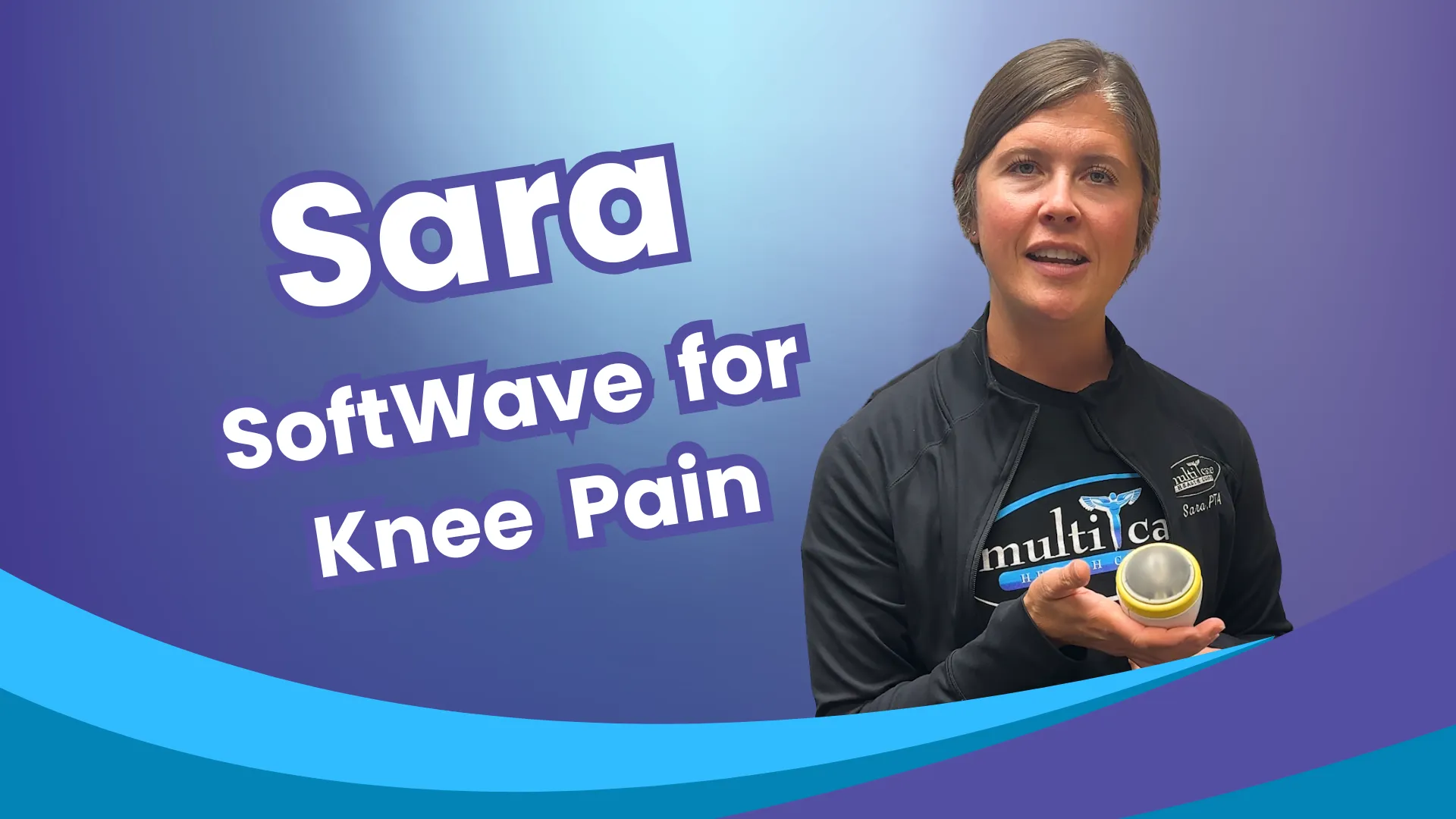
In this video, Sara, a Physical Therapy Assistant at Multicare Health Clinic, explains how SoftWave TRT may help people who are experiencing knee pain.
Many people assume their only choices are to live with the pain, take medication, receive injections, or consider surgery. Although those options may be appropriate in certain situations, some patients may benefit from a conservative treatment called SoftWave Tissue Regeneration Technology.
SoftWave therapy uses acoustic shockwaves to stimulate a biological response within painful or injured tissues. The goal is not simply to cover up pain temporarily. The treatment is designed to encourage circulation, cellular activity, tissue repair, and the body’s natural healing response.
What Is SoftWave TRT?
SoftWave TRT is a specialized form of extracorporeal shockwave therapy. The device creates acoustic energy waves that travel through a handheld applicator and into the treatment area.
A small amount of gel is placed on the skin to help the acoustic energy enter the tissue. The provider then moves the applicator around the knee while delivering a series of gentle pulses.
SoftWave uses a broad, focused energy field rather than concentrating all of the energy at one tiny point. This allows the treatment to reach a wider area that may include muscles, tendons, ligaments, connective tissue, and other structures surrounding the knee.
The SoftWave device is not an electrical stimulation machine, ultrasound machine, laser, or massage device. It produces pulsed acoustic shockwaves that are transmitted through the applicator and into the treatment area.
How Does SoftWave Therapy Work?
When acoustic waves enter an injured or irritated area, the mechanical energy is converted into biological signals within the tissue. This process is known as mechanotransduction.
These signals may help stimulate several processes that are involved in healing.
1. It May Improve Local Circulation
Healthy blood flow is important because blood delivers oxygen and nutrients that tissues need for repair.
SoftWave therapy is designed to temporarily increase local blood circulation in the treatment area. Improved circulation may help create a more favorable environment for healing, especially in tissues that have remained irritated for an extended period.
2. It May Activate the Body’s Natural Repair Response
SoftWave therapy does not inject stem cells into the knee.
Instead, acoustic energy may stimulate biological signals that help recruit and activate the body’s own resident repair cells. The purpose is to encourage the body to respond to tissue that may have stopped progressing through the normal healing process.
3. It May Help Regulate Inflammation
Inflammation is a normal part of healing. However, inflammation that continues for too long may contribute to ongoing pain, stiffness, and sensitivity.
Shockwave therapy may influence inflammatory signaling and help the body move from a prolonged inflammatory state toward tissue repair and remodeling. This does not mean that SoftWave instantly eliminates all inflammation. Rather, it may help support a healthier healing response.
4. It May Reduce Knee Pain
SoftWave therapy may help reduce sensitivity in painful tissues and support changes within the treatment area that occur over time.
Research involving extracorporeal shockwave therapy for knee osteoarthritis has found improvements in pain and physical function among some patients. Results vary depending on the condition, treatment protocol, severity of the problem, and individual patient.
5. It May Support Tissue Repair
Knee pain does not always come from a single structure. Muscles, tendons, ligaments, connective tissue, and the joint itself may all contribute to symptoms.
Because SoftWave treats a broad area, it may help stimulate biological activity in multiple tissues surrounding the painful region. This can be particularly valuable when the exact source of the symptoms is not limited to one small point.
6. It Does Not Require Surgery, Needles, or Anesthesia
SoftWave is a noninvasive treatment. It does not require an incision, injection, medication, or anesthesia.
Most patients require little or no downtime after a session. Some people may experience temporary soreness, redness, or mild swelling in the treated area, but these effects are generally brief.
7. It Can Complement Physical Therapy
SoftWave therapy may be used as part of a broader rehabilitation plan.
Reducing pain and improving tissue tolerance may make it easier for a patient to participate in strengthening, mobility exercises, balance training, and other physical therapy activities.
SoftWave does not replace the need to address weakness, restricted movement, poor mechanics, or other factors that may be contributing to knee pain. It may help create an opportunity for the patient to move and exercise more comfortably.
What Does SoftWave Treatment Feel Like?
During treatment, Sara moves the SoftWave applicator around the knee while communicating with the patient.
Healthy tissue may produce very little sensation. Areas that are irritated or injured may feel more tender or sensitive when the acoustic waves reach them.
This feedback can help Sara identify the areas that may need additional attention. She can adjust the intensity and position of the applicator based on the patient’s comfort and response.
Some patients describe the sensation as tapping, pulsing, pressure, or brief tenderness. The treatment should remain tolerable. SoftWave sessions commonly last approximately five to ten minutes, although the total appointment may be longer depending on the evaluation and the size of the treatment area.
Who May Be a Candidate for SoftWave Therapy?
SoftWave therapy may be considered for patients with certain types of knee pain, including pain involving tendons, muscles, ligaments, connective tissue, overuse injuries, and degenerative joint changes.
It may be especially appealing to someone who is looking for a conservative option before considering injections or surgery.
However, knee pain can have many causes. A proper evaluation is important before beginning treatment. SoftWave may not be appropriate for every condition or every patient.
Severe injuries, fractures, infections, significant swelling, blood clots, sudden loss of movement, or other serious conditions may require additional testing or a different type of care.
Frequently Asked Questions About SoftWave TRT
Is SoftWave the Same as a Cortisone Injection?
No. SoftWave does not inject medication into the knee.
A cortisone injection is intended to reduce inflammation through medication. SoftWave uses acoustic energy to stimulate a biological response within the tissues.
The appropriate treatment depends on the patient’s diagnosis, overall health, symptoms, and treatment goals.
Does SoftWave Inject Stem Cells?
No. There are no stem cells, medications, or other substances injected during a SoftWave treatment.
The acoustic waves are intended to stimulate signaling within the body that may activate or recruit the patient’s own resident repair cells.
Is SoftWave Treatment Painful?
Most patients tolerate SoftWave therapy well.
Sensitive areas may feel uncomfortable when the applicator passes over them. This sensitivity can help identify the tissues that may need treatment.
Sara communicates with the patient throughout the session and can adjust the intensity according to the patient’s comfort.
How Long Does a SoftWave Session Take?
The active SoftWave portion of an appointment commonly takes approximately five to ten minutes. Treatment time may vary depending on the size of the area, the condition being treated, and the patient’s response.
How Many Treatments Will I Need?
The number of sessions depends on the condition, how long the pain has been present, the severity of the problem, and how the patient responds.
Some people notice improvement after an early session. Others experience gradual changes over several weeks as the body moves through the repair and remodeling process.
Many treatment plans involve a short series of visits, but the provider will make recommendations based on the individual patient rather than using the same plan for everyone.
Will I Feel Better Immediately?
Some patients report an early reduction in pain or improved movement. Others notice improvement more gradually.
SoftWave is intended to stimulate biological processes that continue after the treatment is completed. For this reason, the full response may develop over several weeks rather than occurring immediately.
Can I Return to Normal Activities After Treatment?
Most patients can return to ordinary daily activities after a SoftWave session.
However, the underlying knee condition may still require temporary activity modifications. Feeling better does not necessarily mean the tissue has completely healed.
Sara and the Multicare team can provide guidance regarding exercise, work activities, and other movements based on the patient’s condition.
Does SoftWave Replace Physical Therapy?
SoftWave can be used alongside physical therapy, but it does not replace every part of a rehabilitation program.
Strength, flexibility, balance, coordination, joint mobility, and movement mechanics may all need to be addressed. SoftWave may help reduce discomfort and improve tissue tolerance so that patients can participate more effectively in rehabilitation.
Can SoftWave Prevent Knee Surgery?
SoftWave cannot guarantee that surgery will be avoided.
Some patients may experience enough improvement with conservative care that more invasive treatment is delayed or no longer necessary. Other patients may still require imaging, injections, an orthopedic consultation, or surgery.
The goal is to determine whether a reasonable conservative option may help before moving toward a more invasive procedure.
Is SoftWave FDA-approved?
SoftWave devices have received FDA 510(k) clearance for specific uses, including temporary relief of minor muscle aches and pains, temporary improvement in local blood circulation, activation of connective tissue, and certain wound and burn applications.
The correct regulatory term is FDA cleared rather than FDA approved. FDA clearance for specific uses does not mean every type of knee pain is an FDA-cleared indication. Treatment recommendations should be based on an appropriate clinical evaluation.
Is SoftWave Safe for Everyone?
SoftWave has a favorable safety profile when it is used appropriately, but it is not suitable for every patient.
Patients should tell their provider if they are pregnant, have a blood-clotting disorder, take blood-thinning medication, have an active infection, have cancer near the treatment area, or have another significant medical condition.
The Multicare team will review your health history and determine whether SoftWave is an appropriate option.
Does Insurance Cover SoftWave Therapy?
Insurance coverage varies by plan and diagnosis. Some insurance plans do not cover SoftWave therapy for musculoskeletal pain.
The Multicare Health Clinic team can explain treatment costs and payment options before you begin care.
What Does Research Say About Shockwave Therapy for Knee Pain?
Research involving extracorporeal shockwave therapy has shown encouraging results for certain musculoskeletal conditions.
Several systematic reviews and randomized studies involving people with knee osteoarthritis have reported reductions in pain and improvements in function following shockwave therapy. However, treatment methods differ among studies, and not every patient experiences the same result. More research is continuing to determine which patients, energy levels, and treatment schedules provide the greatest benefit.
SoftWave should therefore be viewed as one potential part of a personalized treatment plan rather than a guaranteed cure for every type of knee pain.
Could SoftWave TRT Help Your Knee Pain?
You do not have to assume that knee pain is simply something you must live with.
If knee pain is making it difficult to walk, exercise, work, climb stairs, or enjoy your normal activities, the team at Multicare Health Clinic can evaluate your condition and discuss your treatment options.
SoftWave TRT may provide a noninvasive and drug free option that supports circulation, tissue repair, pain reduction, and the body’s natural healing response.
Contact Multicare Health Clinic to find out whether SoftWave therapy may be appropriate for you.
📍 Multicare Health Clinic
🏥 3930 Stadium Dr, Sioux City, IA
📞 Call or text: 712-276-4325
🌐 MulticareClinic.com
Individual results vary. SoftWave therapy may not be appropriate for every patient or condition. This information is educational and is not a substitute for an examination, diagnosis, or individualized medical advice.